




By Matt Ruggieri, Co-founder & Head of Product Development, Onekind
Quick Answers
Can you wear santal during the day?
Yes. Santal is one of the few woody scents that works just as well in daylight as at night. Its softness keeps it from feeling too heavy, and because it stays close to the skin, it reads as polished rather than overpowering — even in warm weather.
Is santal a fall and winter scent?
Santal is traditionally associated with colder months because its warmth pairs naturally with autumn and winter. But sandalwood's creaminess makes it surprisingly versatile — it works in spring and summer too, especially in a lighter perfume oil formula that wears closer to the skin.
What fragrances layer well with santal?
Santal layers beautifully with florals (rose, jasmine, violet), citrus top notes (bergamot, yuzu), and ambers or musks. It acts as a grounding base that makes lighter notes last longer and smell richer.
Does perfume oil santal wear differently than spray?
Yes — significantly. Perfume oil santal sits directly on the skin without the alcohol drydown, so it's warmer, more intimate, and longer-lasting. It develops more slowly than a spray and feels less like wearing a fragrance and more like the scent is coming from you.
I get asked about santal timing more than almost any other fragrance question. When do you wear it? Is it a night scent? A winter scent? Can you wear it to work, or does it only belong at a dinner table with candles and a glass of wine?
My answer is always the same: santal is less restricted by occasion than almost any other fragrance category. But there are definitely moments where it shines brighter than others — and moments where the formula you choose matters as much as the scent itself.
Here's how I think about it.
Daytime vs. Nighttime: Does It Actually Matter?
Most fragrance "rules" about day vs. night come from an era of heavy, projection-first perfumery. Big florals. Dense musks. Fragrances designed to announce you from across a room. Those genuinely don't work in a morning meeting. But santal isn't that.
Sandalwood's defining quality — the thing that made it the fragrance note of the last decade — is that it wears close to the skin. It's intimate. You have to get near someone to appreciate it. That quality makes it as appropriate at 9am as it is at 9pm.
That said, there are real differences in how santal feels depending on when you wear it.
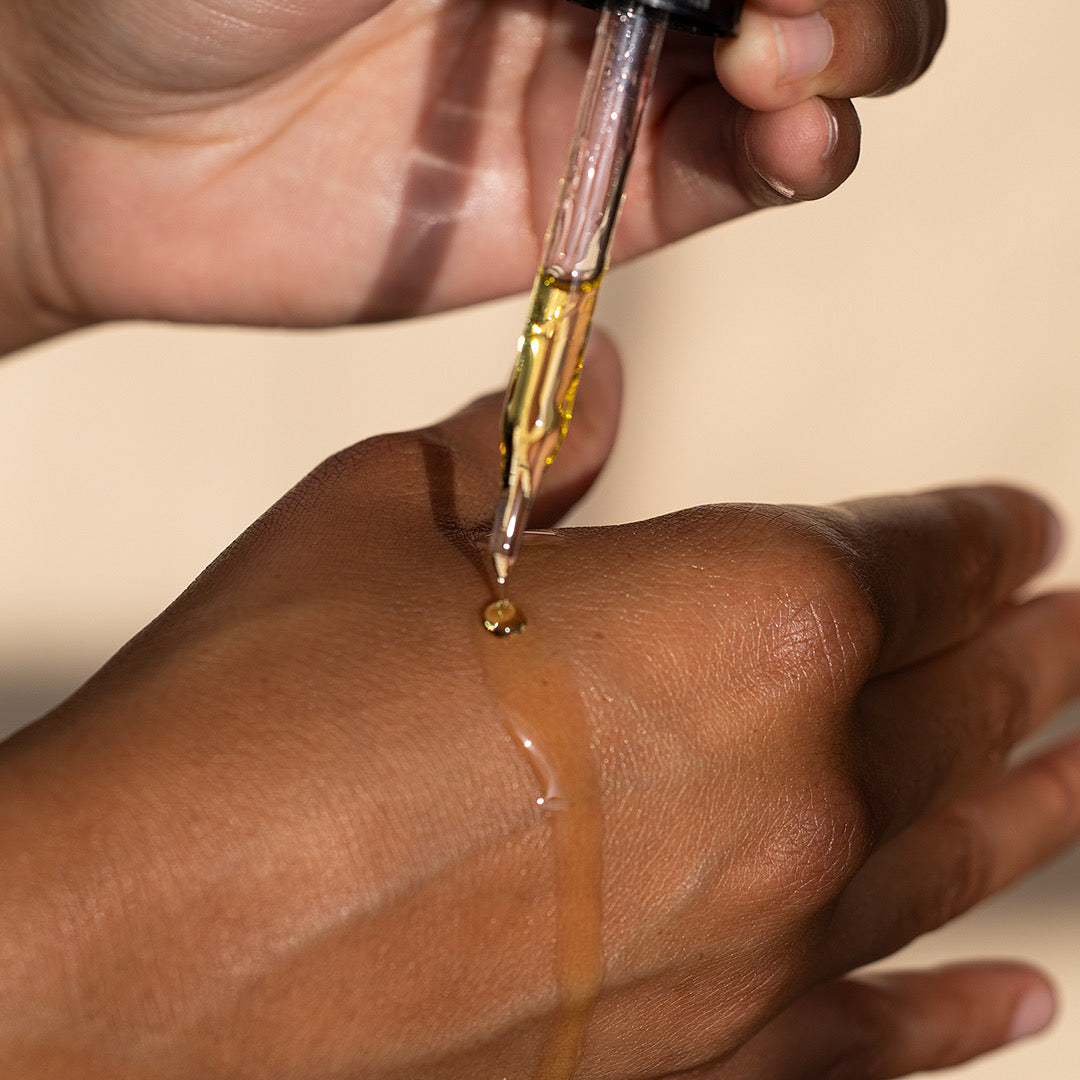
During the day, santal reads as polished and grounded. It doesn't compete with what you're doing — it just quietly elevates it. I wear our Santal Era Perfume Oil most mornings, honestly. Two or three drops on my wrists and neck before I leave the house. By the time I'm in a meeting or a coffee shop, it's fully settled into my skin and it just smells like me, but better.
At night, santal gets more interesting. Body heat amplifies it. The warmth of the room, the proximity of other people — all of it makes sandalwood open up in a way it doesn't always get to during the day. The creaminess deepens. The sweetness gets more pronounced. A scent that was quiet and polished during the day becomes something a little more seductive at night without you doing anything differently.
So: both. Wear it both times. Just know they're slightly different experiences.

Seasonal Wear: The Honest Answer
The conventional wisdom is that santal is a fall and winter scent. Warm, woody, cozy — it maps onto the season obviously. And it's true that there's something deeply right about sandalwood in October. Cold air, warm skin, the contrast between the two.
But I've always found the seasonal rules for fragrance a little limiting. Especially for santal.
Here's what actually changes with the seasons: how your skin behaves. In cold weather, skin is drier and absorbs fragrance differently — santal tends to last longer and develop more slowly. In warm weather, skin is warmer and sweat-moistened, which means scent projects more easily and evolves faster on your skin.
For a spray perfume with a high alcohol content, that can mean santal goes from pleasant to overwhelming in summer heat. But for a perfume oil — which is how we made Santal Era — the equation is different. There's no alcohol volatility. The oil sits on your skin and warms with it. In summer, it's soft and close. In winter, it's deep and enveloping. Both are good. Neither is wrong.
Fall and winter are where santal is at its most dramatic — the warmth of the scent contrasting with cold air, the coziness matching the season's general energy. This is when I layer it most, when I apply a bit more generously, when I let it be the whole statement.
Spring is an underrated time for santal. The creamy, slightly sweet quality of sandalwood pairs surprisingly well with the lighter, more optimistic energy of April and May. It doesn't feel heavy. It feels like a warm undercurrent beneath whatever else is happening.
Summer is where formula matters most. Heavy spray perfumes with dense santal bases can turn cloying in heat. Santal Era as a perfume oil doesn't do that — the projection is naturally lower, the wear is closer to your skin, and it just reads as warm rather than heavy even at 85 degrees.
Occasion: Where Santal Actually Belongs
Rather than day vs. night or summer vs. winter, I find occasion to be the more useful axis for santal.
Work: Yes, unambiguously. Santal is one of the safest fragrances to wear in professional settings precisely because it doesn't project aggressively. It won't fill a conference room. It won't make someone in the elevator uncomfortable. It's intimate by design. Our Santal Era Perfume Oil is what I'd describe as a fragrance that rewards the people who get close to you — which is exactly what you want in a professional setting.
Casual daily wear: This is honestly where santal lives for most people who love it. It's not a statement fragrance in the way that a big floral or a sharp citrus is. It's more like a signature — something that just becomes part of how you smell, reliably, every day. That's not a criticism. That's a compliment. The best personal fragrances work this way.
Date nights and evenings out: Santal absolutely works here. As I mentioned earlier, body heat and proximity do interesting things to sandalwood. Layer it with something that has more of a top note — a citrus, a floral, even a light smoke — and santal becomes the warm base that holds the whole composition together and makes it last.
Travel: Perfume oil santal is my travel non-negotiable. It packs small, it doesn't spill the way spray bottles do, and it layers well with whatever the local environment brings. I've been wearing Santal Era on planes for two years and I genuinely think it makes the experience better — not for other people, but for me. There's something grounding about a scent you associate with feeling put-together.
How to Layer Santal With Other Fragrances
This is where things get genuinely fun. Santal is one of the great base notes in fragrance — it grounds and extends everything layered on top of it, and it's versatile enough to work with almost any fragrance family.
A few combinations I've found work well:
Santal + citrus: Apply a citrus cologne or spray first, let it dry slightly, then layer Santal Era on pulse points. The citrus gives you a bright, fresh opening; the santal provides a warm, long-lasting dry-down. The result is a combination that smells expensive and complex. The citrus fades naturally over an hour or two, leaving the santal to do its thing for the rest of the day.
Santal + floral: Santal under a rose or jasmine fragrance creates something that smells deeply personal — romantic without being sweet, complex without being heavy. The florals get lifted; the santal gets softened. If you have a floral perfume that feels a little flat or one-dimensional on its own, try layering it over a base of Santal Era. It changes the character entirely.
Santal alone: Honestly, this is how I wear it most of the time. Santal's complexity comes from how it interacts with your own skin chemistry, not from combining it with other fragrances. Apply it to warm pulse points — inner wrists, base of the neck, the soft skin inside the elbow — and let your body do the work. No layering required.
The key to layering with a perfume oil is application order. Oils go on skin last, after any spray-based fragrances. The oil acts as a fixative, slowing evaporation and helping the whole composition last longer. Apply the oil to the warmest spots on your body — wherever your pulse is strongest — and let the heat do the work.
The Format Question: Why Perfume Oil Santal Is Different
I want to say something about format because I think it genuinely changes the answer to "when can I wear santal."
Most santal fragrances on the market are alcohol-based sprays. The alcohol serves a purpose — it disperses the fragrance as a mist and creates the opening burst of scent you get in the first few minutes after application. But alcohol also dries out, and it dries fast. That opening burst fades, and what you're left with is whatever the base notes are when the alcohol evaporates.
Perfume oil doesn't work that way. There's no opening burst, no drydown, no alcohol evaporation. The scent develops slowly and continuously, driven entirely by your skin's warmth. It starts subtle and deepens over hours. It stays closer to your body. It doesn't project into a room; it radiates from your skin.
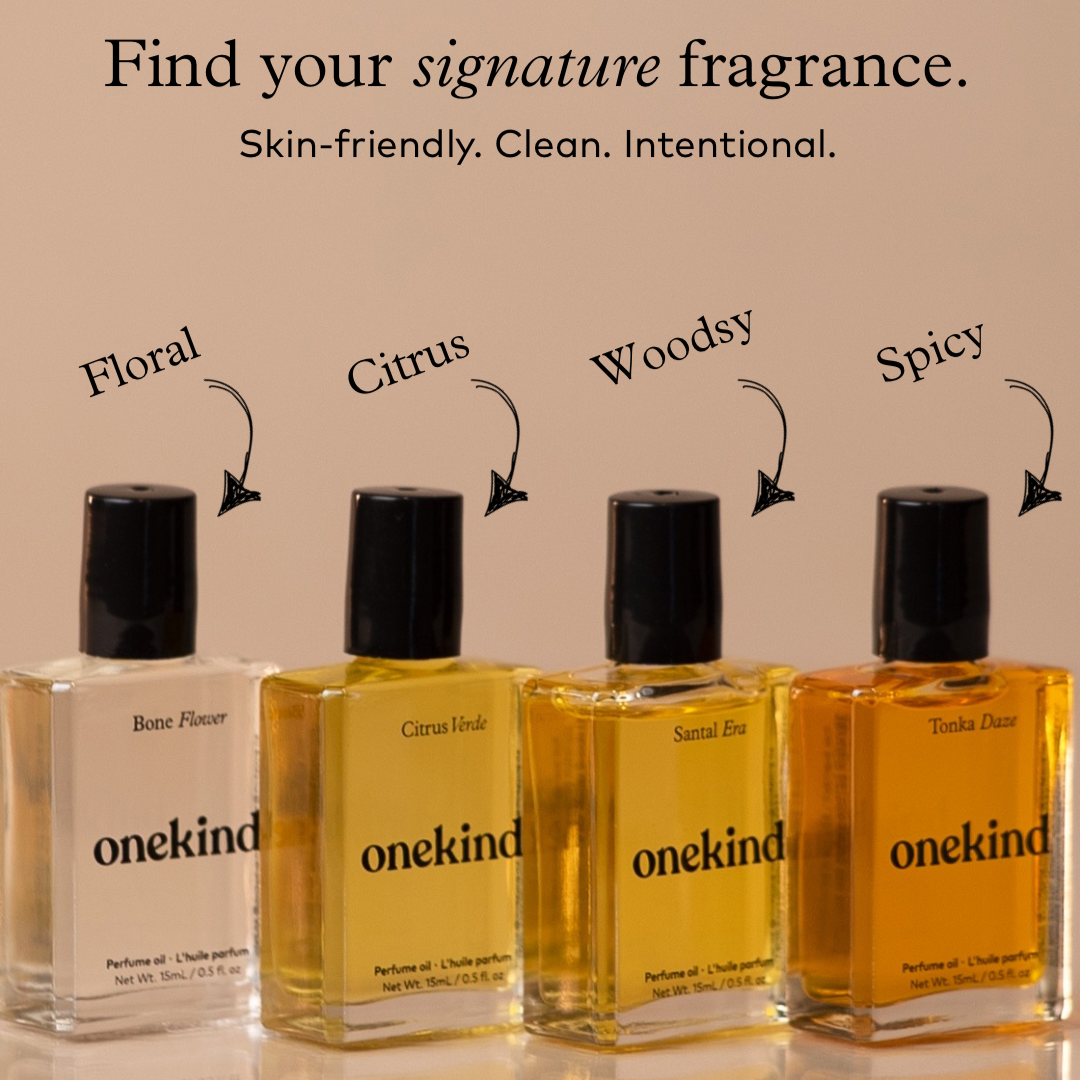
For santal specifically, that format is a natural match. Sandalwood's appeal is intimacy — the fact that you have to get close. An oil-based formula doubles down on that quality. Santal Era Perfume Oil is exactly that: sandalwood's creamy warmth, amplified by the skin-close nature of oil, with violet, cardamom, leather, amber, and musk that develop slowly across the day.
The practical implication for "when to wear" is that the format makes the scent more seasonally and contextually flexible. You can wear it in summer because it won't project aggressively in heat. You can wear it in professional settings because it won't fill the room. You can wear it during the day because it's subtle enough not to feel like a statement. You can wear it at night because it deepens beautifully with body warmth.
That flexibility is why I made Santal Era as an oil and not a spray. I wanted something I could wear anywhere, every day, in any season — and that's exactly what it is.
My Actual Routine
In case it's useful: I wear Santal Era almost every day. Two to three drops, applied to my inner wrists and the base of my neck after I get out of the shower, before I put on clothes. I let it settle for a few minutes — the cardamom and violet are noticeable at first, then they quiet down and the sandalwood and amber take over for the rest of the day.
In colder months I sometimes apply a fourth drop to the inside of my elbow. In summer I use two drops and that's enough. When I'm traveling or going somewhere I want to smell particularly good, I apply a little more to the back of my neck, which projects more as my body warms up through an evening.
That's it. No complicated layering protocol, no seasonal switchover. Just a fragrance that works, consistently, because the formula is built for it.
If you haven't tried it: Santal Era Perfume Oil. It's the one I'd want in my bag regardless of the season, the occasion, or the time of day.
Written by Matt Ruggieri, Co-Founder & Head of Product Development at Onekind, with 15+ years of experience in beauty product formulation and development.