





That tight, squeaky-clean feeling after washing your face isn't a sign your cleanser is working well — it's often a sign it's stripping your skin barrier. A well-formulated cleanser should leave your skin feeling comfortable and balanced, not dry, taut, or sensitized. If you're experiencing any of the signs below, your cleanser may be the root cause — and switching to a gentler formula could be the single most impactful change you make to your routine.
How Your Skin Barrier Works (And Why Cleansing Matters So Much)
Your skin barrier — the outermost layer of skin — is made up of skin cells held together by a matrix of lipids (fats), including ceramides, cholesterol, and fatty acids. This structure keeps moisture in and environmental irritants out. It's also slightly acidic (your "acid mantle"), which helps protect against bacteria and supports healthy skin function.
Harsh cleansers disrupt this structure in two ways: by physically stripping the lipid layer, and by raising the skin's pH above its natural acidic range. Over time, repeated disruption leads to a compromised barrier that's more susceptible to dryness, sensitivity, and visible irritation.
7 Signs Your Cleanser Is Damaging Your Skin Barrier
1. Your Skin Feels Tight or Dry Immediately After Washing
This is the clearest sign. Your skin should feel comfortable — slightly dewy, never taut — immediately after cleansing. Tightness means the cleanser has stripped too much of your natural moisture and oil. It's not "clean" — it's dehydrated.
2. Products That Used to Feel Fine Now Sting or Burn
If you apply your usual serum or toner and it stings in a way it never used to, your barrier has likely been compromised. A healthy barrier filters out the irritating components of products; a damaged one lets them penetrate more readily, causing that burning sensation.
3. Your Skin Looks More Red Than Usual After Cleansing
Some temporary flushing from warm water is normal. But persistent visible redness that lingers for 30+ minutes after washing is a sign your cleanser is triggering irritation. This is particularly common with foaming cleansers containing harsh sulfates like sodium lauryl sulfate (SLS).
4. Your Moisturizer Seems to "Disappear" Without Doing Anything
Severely compromised skin absorbs and loses moisture so quickly that even a good moisturizer can't keep up. If you're applying products and still feeling dry 20 minutes later, the issue may not be your moisturizer — it's that your barrier can't hold moisture at all.
5. You're Breaking Out More Than Usual
Counter-intuitive but real: stripping the skin can actually trigger more breakouts. When you remove too much natural oil, the skin overproduces sebum to compensate. This excess oil can lead to clogged pores and breakouts — even on skin types that weren't previously breakout-prone.
6. Your Skin Looks Dull and Lacks Radiance
A healthy skin barrier reflects light well; a compromised one scatters it. If your skin has lost its natural glow and looks flat or gray, barrier damage could be the cause.
7. You Need More Product Than You Used To
If you're going through moisturizer faster than you used to, or adding new products to try to fix persistent dryness or sensitivity, your cleanser may be undoing everything else you're doing. It's the foundation of your routine — if it's wrong, nothing else can fully compensate.
Ingredients in Cleansers to Avoid for Sensitive Skin
- Sodium Lauryl Sulfate (SLS) — a highly effective but harsh surfactant that strips natural oils and disrupts the lipid barrier; avoid in all face cleansers for sensitive skin
- Sodium Laureth Sulfate (SLES) — milder than SLS but still too stripping for compromised skin
- Synthetic fragrance — one of the most common causes of contact dermatitis, especially problematic when the skin barrier is already weakened
- Alcohol (as a primary ingredient) — drying and disruptive to the lipid barrier with repeated use
- Strong essential oils at high concentrations — even natural botanicals can be irritating for reactive or sensitized skin
What to Look for in a Cleanser for Sensitive or Barrier-Damaged Skin
The ideal cleanser should:
- Use gentle, non-ionic surfactants — look for cocamidopropyl betaine, decyl glucoside, or sodium cocoyl isethionate
- Have a slightly acidic pH (4.5–6.0) to preserve the acid mantle
- Contain conditioning ingredients — glycerin, squalane, or ceramides — that replace what cleansing removes
- Be free of synthetic fragrance
- Leave skin feeling comfortable, not tight
Texture to consider: Cream cleansers and milky formulas tend to be the most appropriate for sensitive and dry skin. Foaming cleansers are the highest-risk format for barrier damage and are generally not recommended for sensitive or compromised skin.
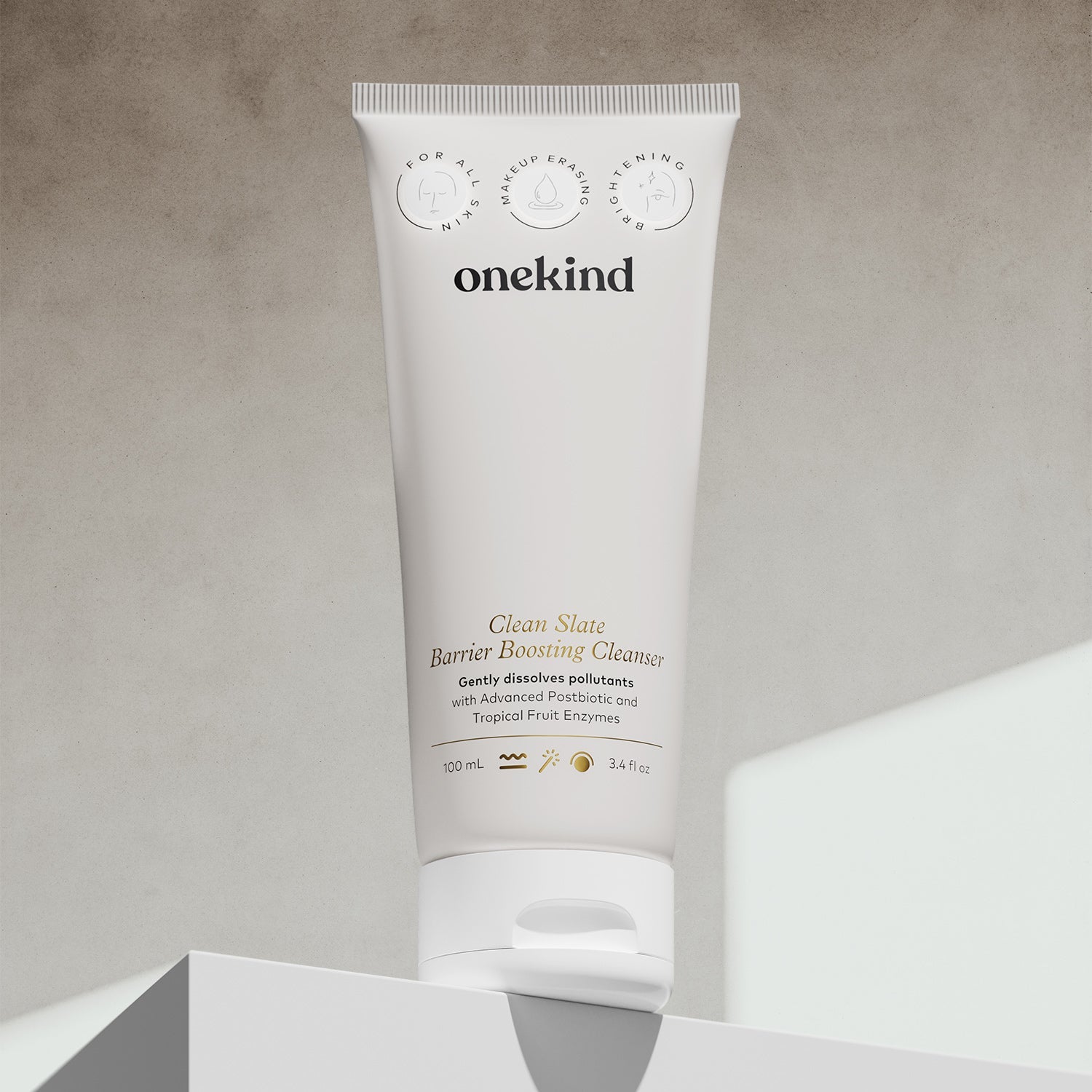
Our Recommendation: Radical Repair® Nourishing Cream Cleanser
The Radical Repair® Nourishing Cream Cleanser was formulated specifically around these principles. It cleanses thoroughly — including makeup removal — without stripping the skin barrier. The cream texture deposits conditioning ingredients as it cleans, so skin feels comfortable and balanced immediately after rinsing.
It's free of synthetic fragrance, dermatologist-tested, and clinically allergy-tested — formulated for sensitive, dry, and barrier-compromised skin that needs a cleanser that doesn't set the rest of the routine back to zero.
Frequently Asked Questions
How can I tell if my skin barrier is damaged vs. just dry?
Dryness (lack of oil) feels tight and rough. Barrier damage often presents as both dryness and dehydration — plus increased sensitivity, stinging from products that used to be fine, and visible redness or flaking that doesn't resolve with regular moisturizing. If moisturizer isn't making your skin comfortable, the barrier is likely the issue.
How long does it take for the skin barrier to repair itself?
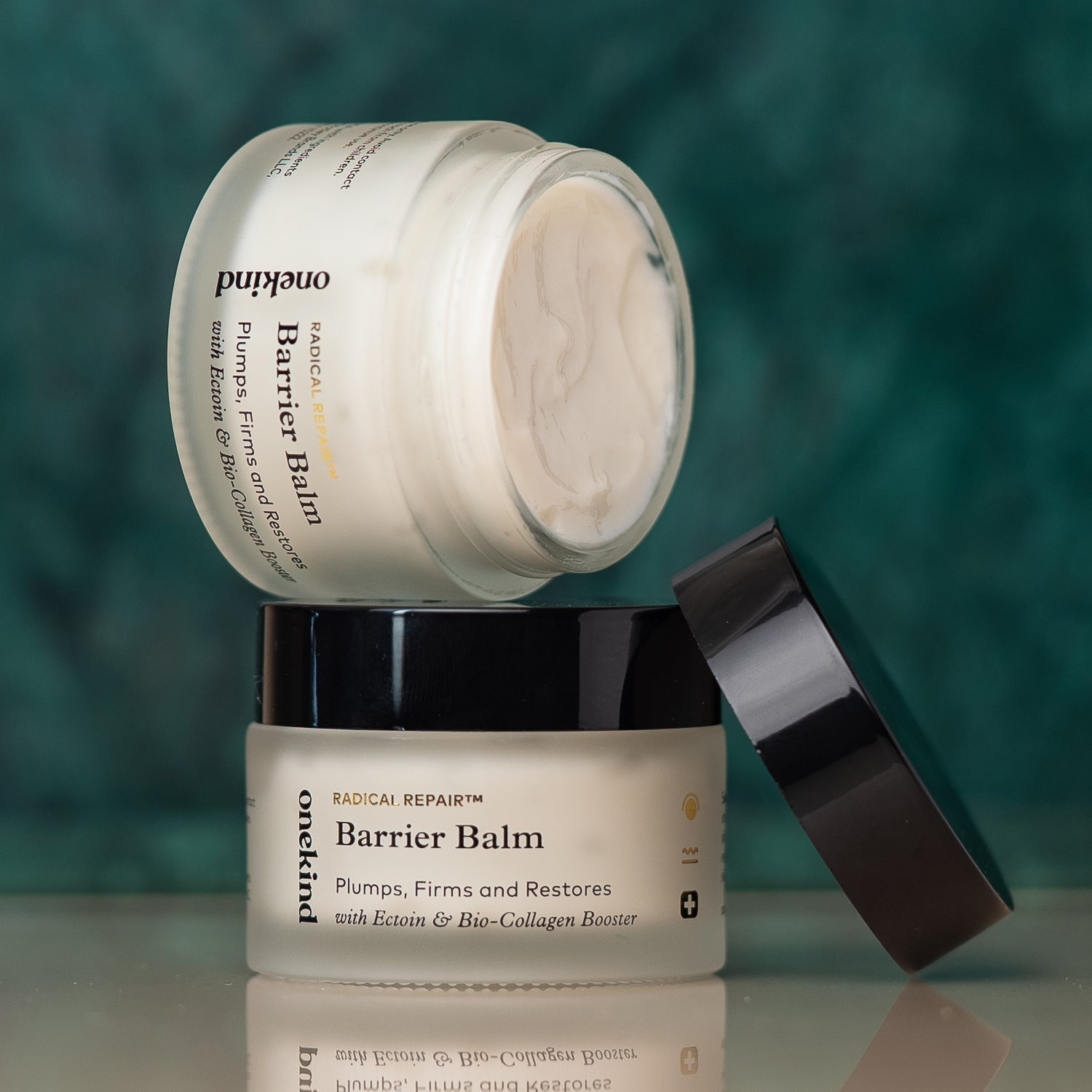
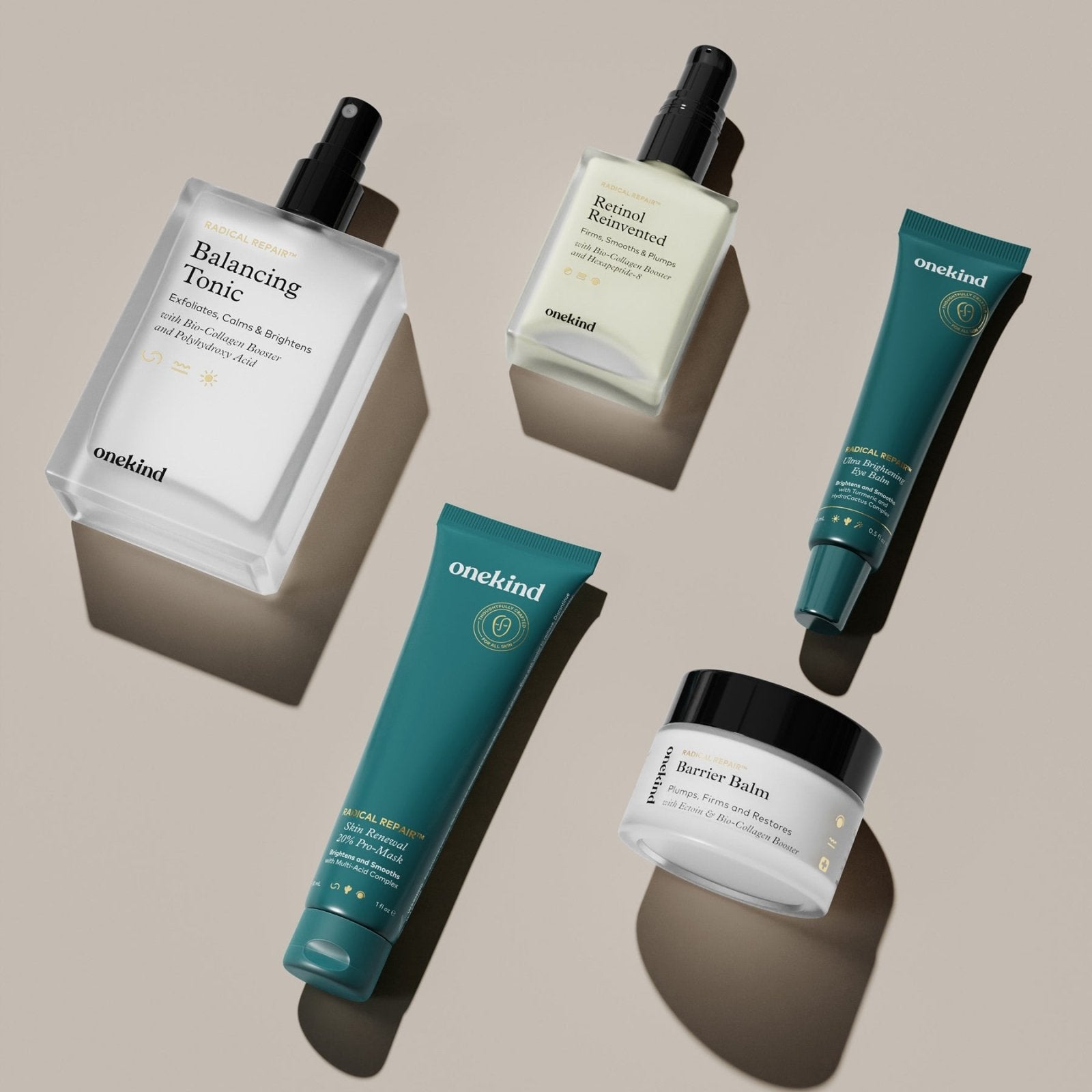
With a simplified routine (gentle cleanser, simple moisturizer, SPF), most people see meaningful improvement in barrier function within 2–4 weeks. Severe damage can take longer. The key is removing the disrupting factors — which often means switching to a gentler cleanser — and giving the skin time. The Radical Repair® Barrier Balm can help accelerate recovery.
Is double cleansing bad for sensitive skin?
Not necessarily — it depends on what you're using. A gentle oil or balm as the first cleanse followed by a gentle water-based cream cleanser is a well-tolerated approach for most sensitive skin types. Using two foaming cleansers in succession, or any harsh formula, is where double cleansing becomes problematic.
Should I be cleansing in the morning too?
For very sensitive or dry skin, a water-only rinse in the morning is a valid approach. If you do cleanse in the morning, a very gentle formula is essential. The Radical Repair® Nourishing Cream Cleanser is mild enough for twice-daily use without over-stripping.
Can a cleanser alone fix a damaged skin barrier?
Switching to a gentle cleanser removes the primary disrupting factor, which is often enough to allow the barrier to begin repairing itself. You can accelerate repair by adding a barrier-focused treatment like the Radical Repair® Barrier Balm to your evening routine — but often, the cleanser switch alone makes a dramatic difference within a few weeks.