



Quick Answer
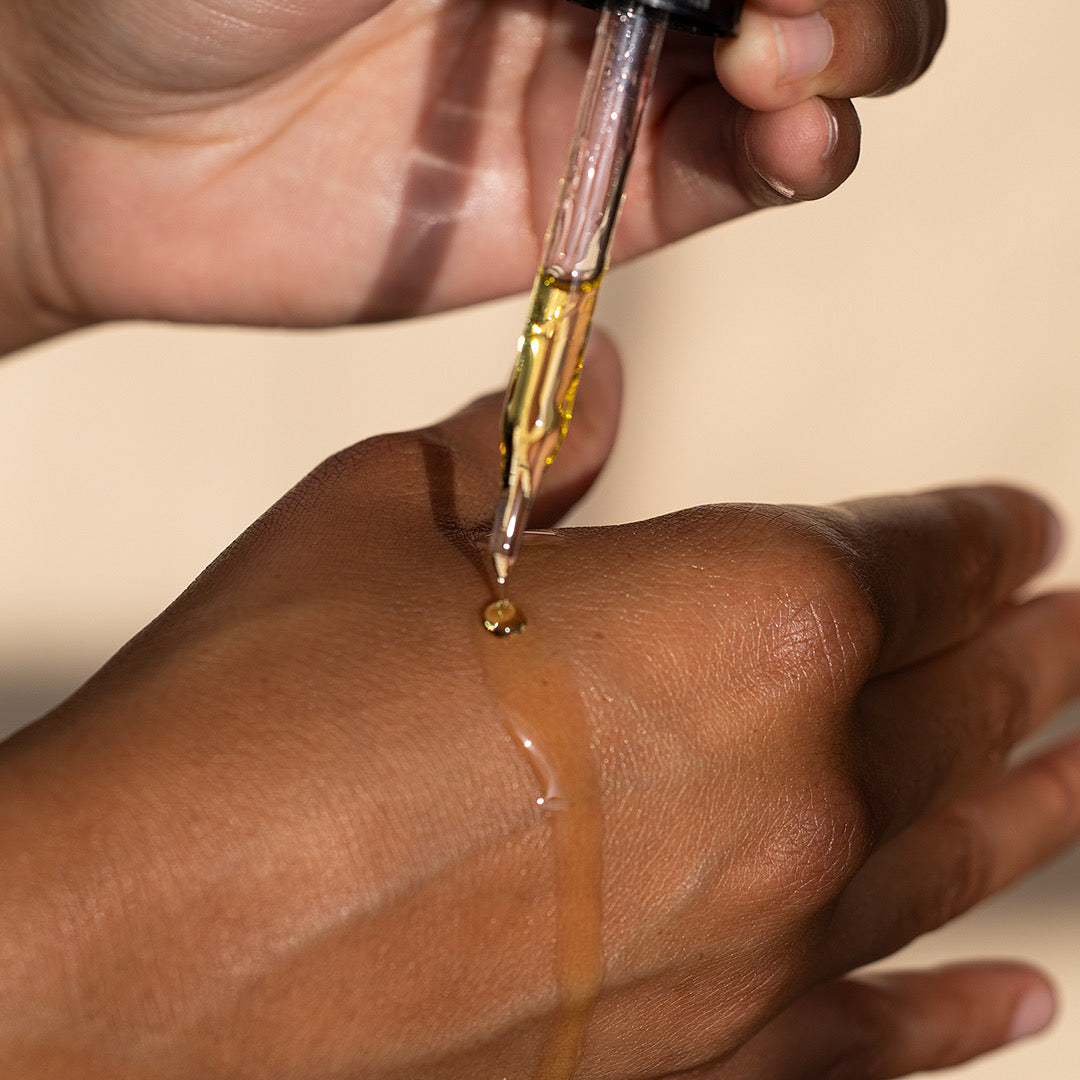
Apply perfume oil directly to pulse points — wrists, inner elbows, the base of the throat, and behind the ears. The warmth at these spots activates and diffuses the scent throughout the day. Unlike alcohol-based sprays, perfume oils don't evaporate quickly, so the fragrance stays closer to skin and lasts longer. Applying to moisturized skin (or over an unscented lotion) helps the oil adhere and extends wear further.
Perfume oil is more concentrated than spray and interacts with skin differently. A few small technique adjustments make a meaningful difference in how long the scent lasts and how it develops throughout the day.
Start With the Right Pulse Points
Pulse points are areas where blood vessels sit close to the surface of the skin. The warmth generated there activates the scent and helps it evolve. The best spots:
- Inner wrists
- Base of the throat / collarbone
- Inner elbow (the soft crease of the antecubital fossa)
- Behind the knees
- Chest / sternum
You don't need all of them. Two or three well-chosen spots is enough. The wrists and throat are the most accessible and the most effective — start there.
Apply to Moisturized Skin
Oil-based fragrance clings better to hydrated skin than to dry skin. When skin is dry, it absorbs the oil quickly — before the scent has a chance to develop and project. Moisturized skin holds the oil at the surface longer, which is exactly what you want.
The best window is right after a shower, when skin is still slightly warm and damp. If your skin tends to run dry, apply a thin layer of an unscented body oil or lotion first, then layer the fragrance on top.
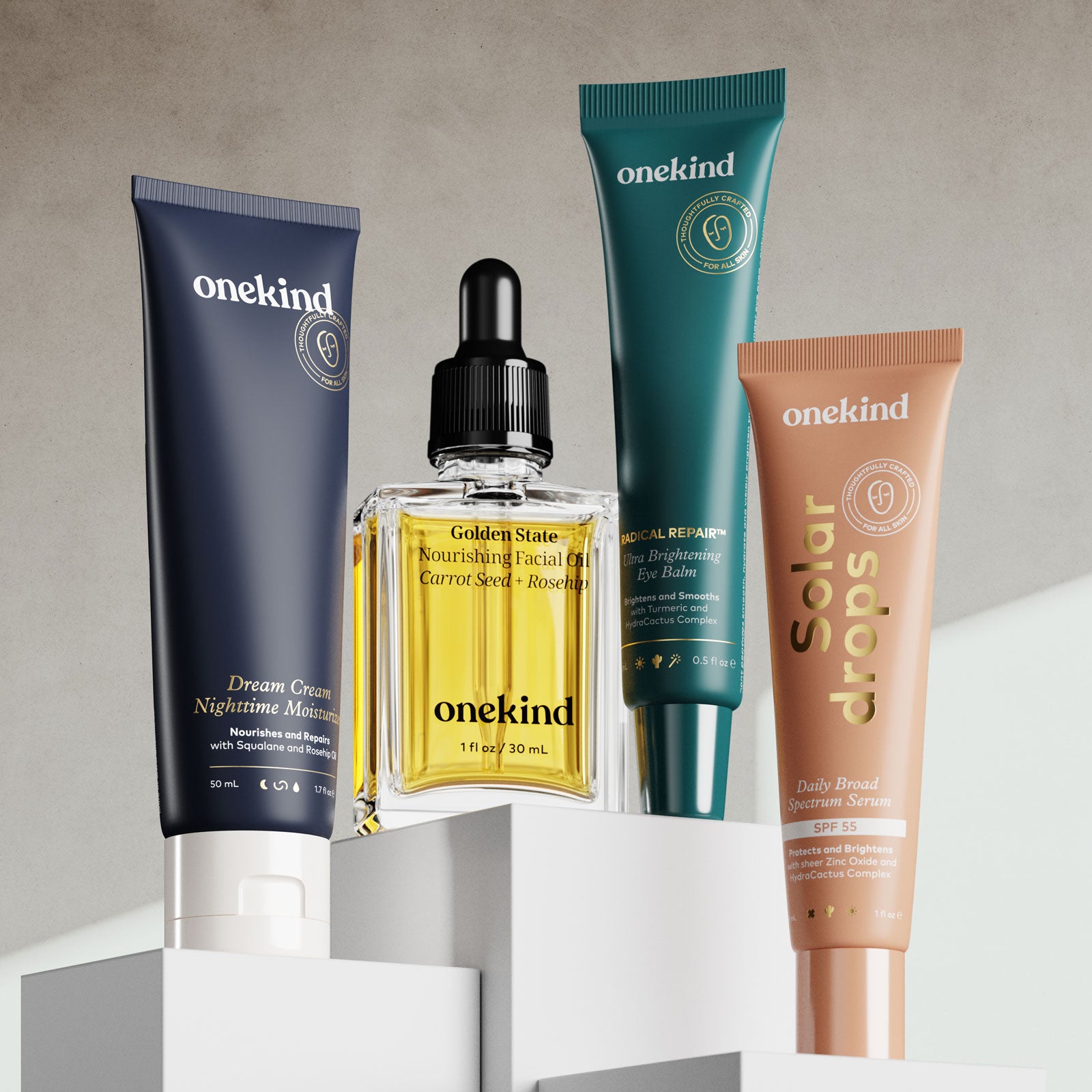
A carrier oil designed for skin works particularly well as a base layer. Golden State Nourishing Facial Oil and Gold Rush Revitalizing Body Oil both pair cleanly with Onekind's fragrance oils — no competing scent, just a moisturized surface that extends wear.
Less Is More — How Much to Use
One to three drops per application is the typical range for a concentrated perfume oil. More isn't better. Perfume oil is dense — the concentration is high by design, and the scent builds as your skin warms it throughout the day.
If you're using a roll-on, a single pass across each pulse point is enough. If you're working from a dropper or open-cap bottle, tip a small amount onto a fingertip and dab. You can always add more; you can't take it back.
Don't Rub — Just Press and Let It Absorb
This is the most common mistake with perfume oil. Rubbing feels intuitive, but it works against you. The friction breaks down fragrance molecules and disrupts the top notes — the first and most delicate layer of the scent profile.
Press or dab instead. Let the oil sink into the skin naturally. The warmth of your pulse points will do the work of activating it.
How Perfume Oil Develops on Skin
Unlike spray perfumes, which project outward immediately, perfume oil stays close to the skin and unfolds in stages. In the first 15 to 30 minutes, you're smelling the top notes — the brightest, lightest elements of the fragrance. Over the next hour, the heart and base notes emerge.
This staged development is one of the best things about wearing oil. The scent becomes more personal over time. It interacts with your skin chemistry in a way that alcohol-based sprays don't.
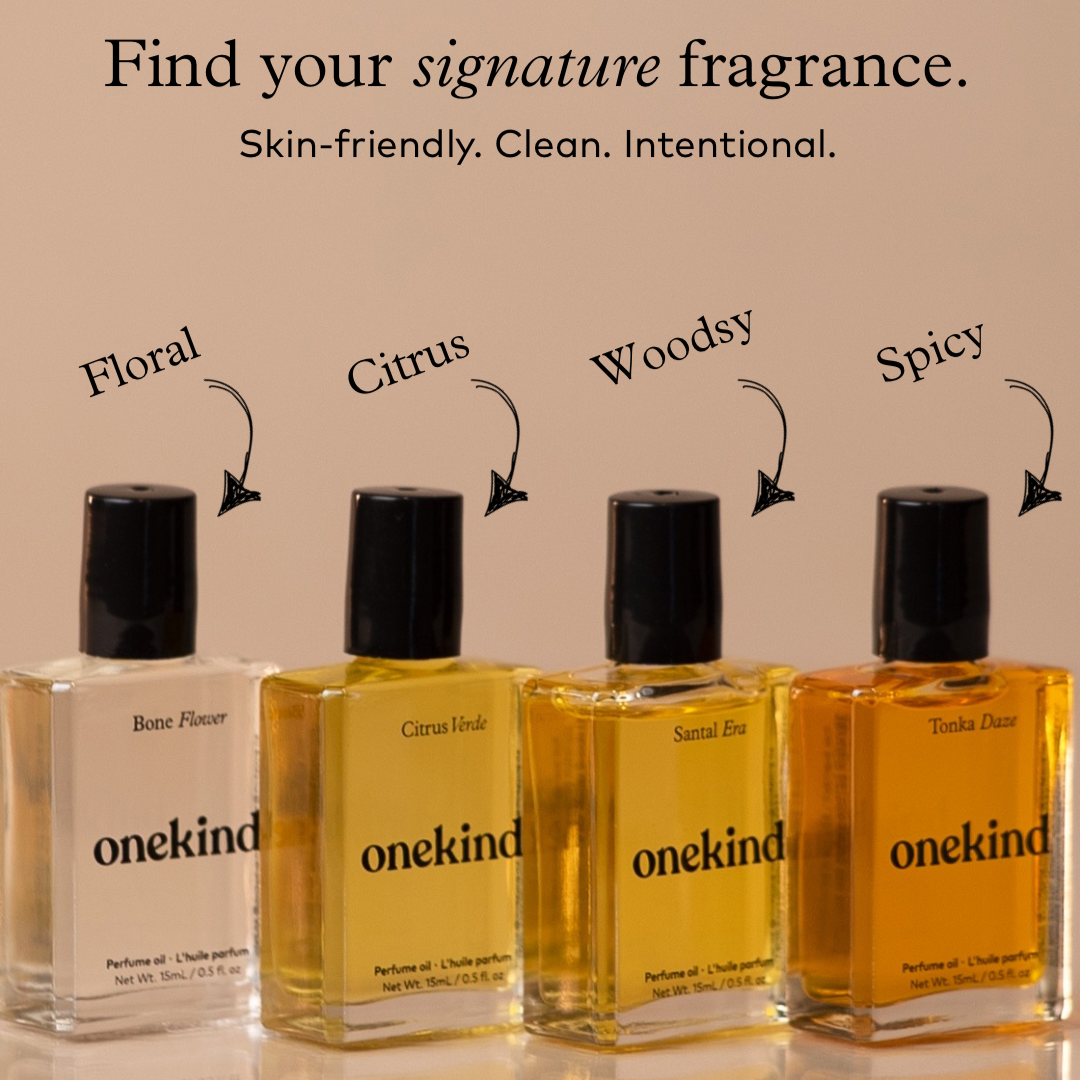
Santal Era Perfume Oil — warm, woody, and slightly creamy — reveals more depth in the base as the hour progresses. Tonka Daze Perfume Oil, a warm vanilla-forward gourmand, opens bright and then settles into something richer and more enveloping. Both reward patience.
Perfume oil is a skin scent. It's intimate and personal rather than something the whole room picks up. That's by design, not a limitation.
Layering Perfume Oil With Other Scents
Perfume oils layer cleanly with each other. The oil base allows scents to blend on the skin rather than clash.
A few approaches that work:
- Layer Bone Flower Perfume Oil — clean white floral — with a light woody or musky base. The floral floats on top; the base grounds it.
- Apply Citrus Verde Perfume Oil first — its bright citrus and herbal character makes a good top layer — then anchor it with something warmer underneath.
The rule for layering: lighter, brighter scents go on last. Heavier, warmer scents anchor the base. Apply warmer oils first, let them absorb, then add the lighter one on top.
Frequently Asked Questions
How do you apply perfume oil?
Apply 1–3 drops directly to pulse points — inner wrists, base of the throat, inner elbow, or chest. Press or dab; don't rub. The warmth of the pulse point activates the scent and helps it develop. Moisturized skin extends the wear significantly.
Where should you put perfume oil on your body?
The most effective spots are the inner wrists, base of the throat, and inner elbow — anywhere the skin is thin and blood vessels are close to the surface. These areas generate the warmth needed to activate and project the scent. Two to three spots is enough for most applications.
How long does perfume oil last on skin?
A well-formulated perfume oil applied to pulse points typically lasts 6–10 hours. Longevity depends on skin hydration, the specific fragrance concentration, and where you apply it. Moisturized skin holds the oil longer; dry skin absorbs it faster and reduces wear time.
Should you apply perfume oil to wet or dry skin?
Slightly damp or freshly moisturized skin is ideal. Oil clings better to hydrated skin than to dry skin, which absorbs the fragrance quickly before it has a chance to develop. Applying right after a shower — or over a thin layer of unscented body oil — is the most effective approach.
Can you apply perfume oil directly to skin?
Yes. Perfume oil is designed for direct skin application. The carrier oil base (typically jojoba or fractionated coconut oil) is skin-safe and non-drying. Apply to pulse points and let it absorb. Avoid sensitive areas like the eyes and any broken or irritated skin.
How much perfume oil should I use?
One to three drops per application. Perfume oil is concentrated, so a small amount goes a long way. Start with one drop per pulse point. If the scent isn't strong enough after 15 minutes of development, add one more. The scent builds as your skin warms — give it time before adding more.
Onekind makes four perfume oils — Santal Era, Tonka Daze, Bone Flower, and Citrus Verde — each free of synthetic fragrance and formulated for direct skin use. Explore the full fragrance collection.
Written by Matt Ruggieri, Co-Founder and Head of Product Development, Onekind.
Written by Matt Ruggieri, Co-Founder & Head of Product Development at Onekind, with 15+ years of experience in beauty product formulation and development.